
Choosing an engagement ring is one of the most meaningful purchases many people will ever make. It symbolizes commitment, values, and a shared future. In recent years, lab diamond engagement rings have emerged as a compelling alternative to traditional mined stones, blending beauty, ethics, and innovation. As technology advances and consumer priorities evolve, these rings are no longer seen as a compromise—they’re a thoughtful, modern choice. From their origins in cutting-edge science to their growing presence in fine jewelry, lab-created diamonds are reshaping how we think about luxury and love.
Table of Contents
What Are Lab Diamond Engagement Rings?
Lab diamond engagement rings feature diamonds that are grown in controlled laboratory environments rather than extracted from the earth. Using advanced techniques such as Chemical Vapor Deposition (CVD) or High Pressure High Temperature (HPHT), scientists replicate the natural conditions under which diamonds form. The result is a stone that is chemically, physically, and optically identical to a mined diamond.
To the naked eye—and even under professional testing—these diamonds are indistinguishable from their natural counterparts. They exhibit the same brilliance, hardness (ranking a 10 on the Mohs scale), and fire. The key difference lies not in quality, but in origin.
The Appeal of Ethics and Sustainability
One of the strongest drivers behind the rise of lab diamond engagement rings is ethics. Traditional diamond mining has long been associated with environmental disruption and, in some regions, human rights concerns. While the industry has made strides toward responsible sourcing, many consumers still seek greater transparency.
Lab-grown diamonds offer a more controlled and traceable supply chain. They typically require less land disturbance and can be produced using renewable energy sources, significantly reducing their environmental footprint. For couples who want their engagement ring to reflect values like sustainability and social responsibility, this option feels aligned and intentional.
It’s in this context that man made diamonds often enter the conversation—not as a marketing gimmick, but as a reflection of progress. The term highlights human ingenuity while addressing long-standing concerns around mining practices.
Beauty, Quality, and the 4Cs
When it comes to evaluating diamonds, the classic 4Cs—cut, color, clarity, and carat—still apply. Lab-grown diamonds are graded using the same standards as mined diamonds, and reputable certification bodies such as IGI (International Gemological Institute) and GIA (Gemological Institute of America) provide detailed reports.
Because lab-grown diamonds are created in controlled conditions, they often have fewer inclusions and more consistent color grades. This means buyers can sometimes afford a higher-quality stone—larger or clearer—within the same budget. The craftsmanship of the ring setting, whether solitaire, halo, or vintage-inspired, further enhances the diamond’s visual impact.
Cost and Value Considerations
Price is another area where lab diamond engagement rings shine. On average, lab-grown diamonds cost 20–40% less than comparable mined diamonds. This price difference allows couples to allocate their budget more flexibly—perhaps choosing a larger center stone, a custom design, or saving for other life milestones.
It’s important to note that resale value can differ. Natural diamonds have historically held stronger resale prices, largely due to their rarity. Lab-grown diamonds, while valuable, are more reflective of manufacturing costs and market demand. For many buyers, however, an engagement ring is not an investment asset—it’s a personal symbol meant to be worn and cherished.
Design Freedom and Customization
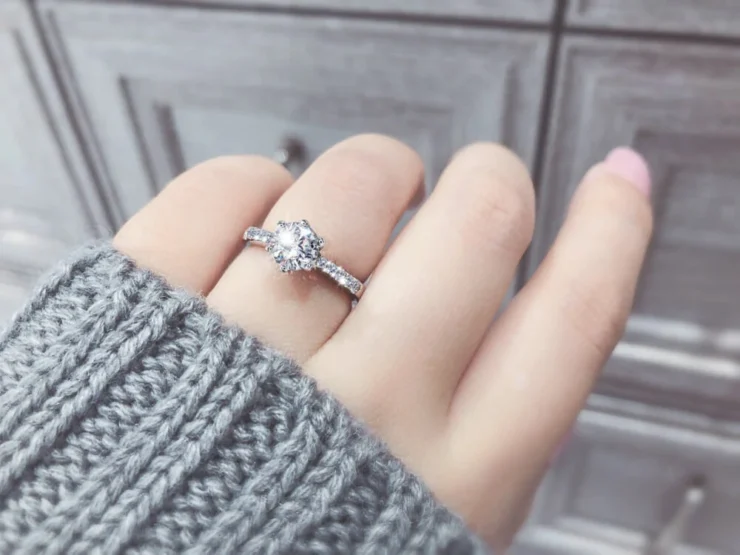
Another advantage of lab diamond engagement rings is the creative freedom they offer. With greater access to high-quality stones, designers and jewelers can experiment with unique cuts, settings, and combinations. Oval, emerald, pear, and cushion cuts are increasingly popular, often paired with minimalist or bespoke designs.
Customization has become a defining trend in modern engagement rings. Couples want pieces that tell their story, whether through engraved details, mixed metals, or unconventional settings. Lab-grown diamonds support this trend by making premium materials more accessible.
As awareness grows, man made diamonds are becoming part of a broader conversation about personalization and conscious luxury—where meaning matters as much as appearance.
Addressing Common Myths
Despite their growing popularity, lab-grown diamonds are sometimes misunderstood. One common myth is that they are “fake” or equivalent to diamond simulants like cubic zirconia or moissanite. This isn’t the case. Lab-grown diamonds are real diamonds, sharing the same atomic structure as mined stones.
Another misconception is that they lack durability. In reality, lab-grown diamonds are just as hard and long-lasting, making them perfectly suited for everyday wear. With proper care, they can last generations.
A Future-Focused Choice
The jewelry industry is evolving alongside consumer expectations. Transparency, sustainability, and innovation are no longer niche concerns—they’re central to purchasing decisions. Lab diamond engagement rings sit at the intersection of these values, offering a blend of tradition and technology.
As younger generations enter the market, the definition of luxury is shifting. It’s less about exclusivity through scarcity and more about thoughtful design, ethical sourcing, and emotional resonance. In this landscape, man made diamonds represent not a departure from romance, but a reimagining of it—grounded in intention and progress.
Conclusion: Love, Redefined
Lab diamond engagement rings are more than a trend; they’re a reflection of changing priorities and possibilities. They offer the same timeless beauty as mined diamonds while addressing modern concerns around ethics, environment, and affordability. Whether chosen for their brilliance, their values, or their versatility, these rings speak to a new generation of couples who want their symbols of love to align with their beliefs.
Ultimately, the best engagement ring is one that feels right—one that tells your story and celebrates your commitment. With lab-grown diamonds, that story can be as bright, enduring, and meaningful as the love it represents.