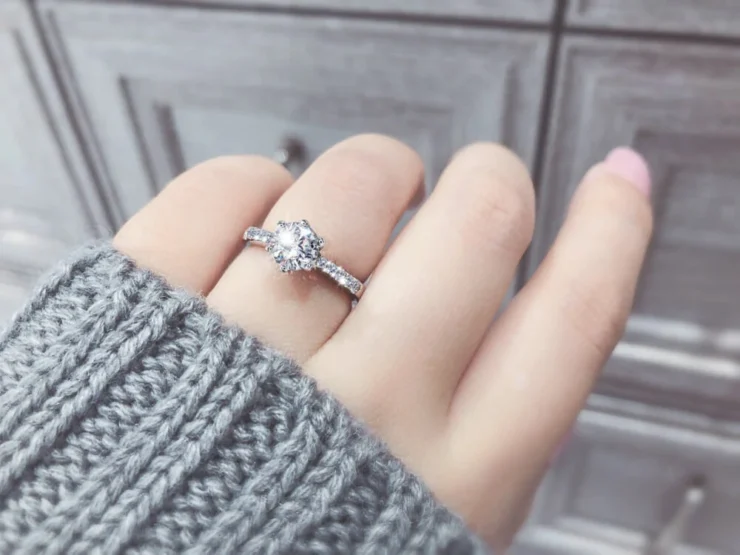

I’ve been around diamonds for most of my working life, and I’ll tell you something that often surprises people: even after years behind the counter, diamonds still have a way of catching me off-guard. Sometimes it’s the way a stone suddenly flashes back a rainbow at an angle you don’t expect, or how two diamonds that look identical on paper can feel completely different in person.
If you’ve ever wandered into a jewellery store and felt a bit overwhelmed by all the numbers, grades and jargon—well, you’re definitely not alone. Almost everyone I meet has the same questions: How much does colour matter? What even is clarity? Am I paying for something only experts can notice?
This is where the diamond colour and clarity chart comes in. It’s one of the best tools you can use to make sense of the whole thing—if you know how to read it. And honestly, once you understand the basics, you’ll start to see diamonds in a very different light (quite literally).
So, let me walk you through it in the same way I’d explain it to a friend sitting across the counter from me—no pressure, no confusing jargon, just the practical stuff that genuinely helps you choose a beautiful stone.
Table of Contents
Why Colour and Clarity Even Matter
When most people think about diamonds, they imagine sparkle. That iconic glitter is what everyone falls in love with first. But the sparkle comes from cut, not colour or clarity.
Colour and clarity are the quiet background players—still important, but not always in the way people assume.
Colour: The Warmth (or Coolness) of the Stone
The colour chart runs from D to Z, with D being the most colourless. As you move down the scale, the diamond displays increasing warmth—usually a yellow or sometimes brownish tint.
Here’s where people often get tricked:
Most diamonds you see in stores aren’t D, E, or F. They’re usually around G to J—because those are the grades where colour becomes very hard to see unless you know exactly what to look for.
And unless you’re putting diamonds side by side under bright white jeweller’s lighting (which, by the way, isn’t how anyone wears diamonds in real life), the difference between a D and, say, an H is surprisingly subtle.
Clarity: Nature’s Fingerprints
Clarity grades tell you how “clean” a diamond is from internal inclusions and surface blemishes.
The scale goes:
- FL (Flawless)
- IF (Internally Flawless)
- VVS1 & VVS2
- VS1 & VS2
- SI1 & SI2
- I1, I2, I3
Now, here’s the thing: most inclusions are tiny—like truly tiny. We’re talking microscopic crystals, faint clouds, or tiny feathers from the diamond’s formation years (or millennia) ago.
The trick is figuring out where the inclusions are, what type they are, and whether you can see them without magnification. That’s the real-life part that charts alone can’t tell you.
Looking at a Diamond Colour and Clarity Chart Without Getting Confused
If you’ve ever Googled one of these charts, you’ve probably seen neat little grids and rows of letters and acronyms. They can feel a bit clinical, but they’re incredibly helpful once you know what you’re looking at.
Here’s a useful reference if you want a visual guide: the diamond colour and clarity chart shows everything in a very clean and easy-to-understand layout.
But let me decode it in a way that feels a bit more human.
The Sweet Spots I Recommend Most Often
I’ve watched thousands of customers compare stones, and most people want the same thing: a diamond that looks exceptional without paying for invisibly small improvements.
In reality, these are the grades people tend to love once they see them:
Colour: G, H, I
Why: They look white on the hand, especially in white gold or platinum, and they offer great value.
Clarity: VS2 or SI1 (sometimes a clean SI2)
Why: Inclusions are often invisible to the naked eye, and you can put your budget toward size or cut instead.
When Higher Grades Actually Matter
There are times when you should consider going higher:
- If you’re buying an emerald cut or Asscher cut: These shapes act like windows, so they show clarity more obviously. Consider VS1 or better.
- If you’re setting the diamond in yellow or rose gold: Lower colour grades can still look beautifully white due to contrast.
- If you’re investing (rare): High-clarity, high-colour diamonds are collected, but that’s a different conversation.
The Role of Cut: The Part People Forget About
I’m going to say something that still surprises clients: if you want the most beautiful diamond possible, prioritise cut above everything else.
Cut determines brilliance—that sparkly “wow” factor. A perfectly cut diamond can outshine a poorly cut diamond with higher clarity and colour.
I’ve seen customers come in dead-set on a D VVS1 diamond, only to realise that a well-cut G VS2 looks brighter, bigger, and more alive.
So don’t let the chart distract you from cut quality. It’s the unsung hero of diamond beauty.
Natural Diamonds vs Lab Created Diamonds: What’s the Difference for Colour and Clarity?
This is one of the biggest conversations happening in jewellery right now, and you might not know this, but lab grown diamonds are evaluated using the exact same colour and clarity standards as mined diamonds.
A D colour lab diamond is every bit as colourless as a D colour mined diamond. The same goes for clarity, shape, sparkle—everything.
The only real difference is origin.
Some couples prefer mined diamonds for their natural formation story. Others choose lab grown for ethical, environmental or budget reasons. It’s ultimately a personal call.
If you’re considering them for a wedding or special gift, I found a lovely write-up recently that explains lab created diamonds from a lifestyle perspective—it’s worth a read if you’re curious.
Viewing Diamonds in Different Lights: The Real-Life Test
One thing I always tell customers—which many jewellers don’t—is to look at a diamond in different lighting conditions:
- Showroom downlights: Everything sparkles like crazy. Great for first impressions.
- Natural daylight: Reveals true colour.
- Soft indoor lighting: Shows clarity and warmth more honestly.
- Shade or diffuse light: Shows overall brightness and symmetry.
Some stones that look flawless under bright LEDs suddenly reveal a tiny tint or inclusion in daylight. Others look even better.
Think of it like test-driving a car. A diamond should look beautiful wherever you take it.
Shape Affects Which Grades Matter More
Most people don’t realise the shape has a big impact on how much you “see” colour or clarity.
Here’s the quick version:
Brilliant Cuts (Round, Oval, Pear, Marquise, Cushion)
These shapes sparkle a lot, which hides both colour and clarity. You can comfortably go lower here.
Step Cuts (Emerald, Asscher)
These are like hallways of mirrors—very elegant, but quite clear and open. They need cleaner clarity and often benefit from higher colour, too.
Crushed Ice Styles (Some cushions and radiants)
These can mask inclusions remarkably well.
Once you understand this, choosing clarity becomes a lot less stressful.
How to Actually Use a Diamond Colour and Clarity Chart When Shopping
A chart is handy, but it’s not the only tool you should rely on. Here’s a little guide I share with customers:
Step 1: Decide what matters most to you
Size? Sparkle? Purity? A specific budget?
Step 2: Choose a colour range that suits your metal
-
White gold/platinum: D–I
-
Yellow/rose gold: You can comfortably go down to J–L
Step 3: Pick a clarity that’s eye-clean
Don’t overpay for grades you’ll never notice.
Step 4: Focus heavily on cut
It’s where the magic happens.
Step 5: Look at the diamond in multiple lighting conditions
Always.
When you follow this process, you’ll narrow down your selection quickly without feeling overwhelmed.
What Most People Don’t Realise About Diamond Grading
Diamond grading is incredibly precise, but it’s not robotic. It involves experienced gemmologists looking at tiny characteristics under magnification. Two diamonds with the same grade might still look different due to the type and placement of an inclusion.
This is why seeing a stone—or at least photos and magnified videos—is more important than relying on the certificate alone.
Trust your eyes. They’re usually right.
When a “Perfect” Diamond Isn’t the Best Choice
This might sound strange coming from someone who works with diamonds every day, but chasing perfection can sometimes backfire.
A flawless, colourless diamond can feel… almost too perfect. Some customers tell me it lacks personality or warmth. A slightly lower-graded diamond can look just as beautiful—sometimes even more so—because it feels alive.
There’s something honest about the tiny quirks and subtleties that make each diamond unique. It’s why people love them in the first place.
Final Thoughts: Choosing a Diamond You’ll Love for Life
If there’s one thing I’ve learned after years of helping people choose engagement rings, anniversary gifts and heirloom pieces, it’s this: a diamond should make you feel something.
Charts, letters and numbers are useful—they help you understand what you’re looking at—but they’re not the whole story. A well-chosen diamond is about beauty, emotion, and that moment when you see a stone and think, Yes, that’s the one.
So use the diamond colour and clarity chart as your guide, but let your instincts have a say, too. Look for a diamond that lights up when you move it, that feels right in your hand, and that makes you smile every time you see it.